Har Har Har Mahadev
हर हर हर महादेव
Eleven verses that set every contradiction about Shiva side by side and refuse to resolve any of them.
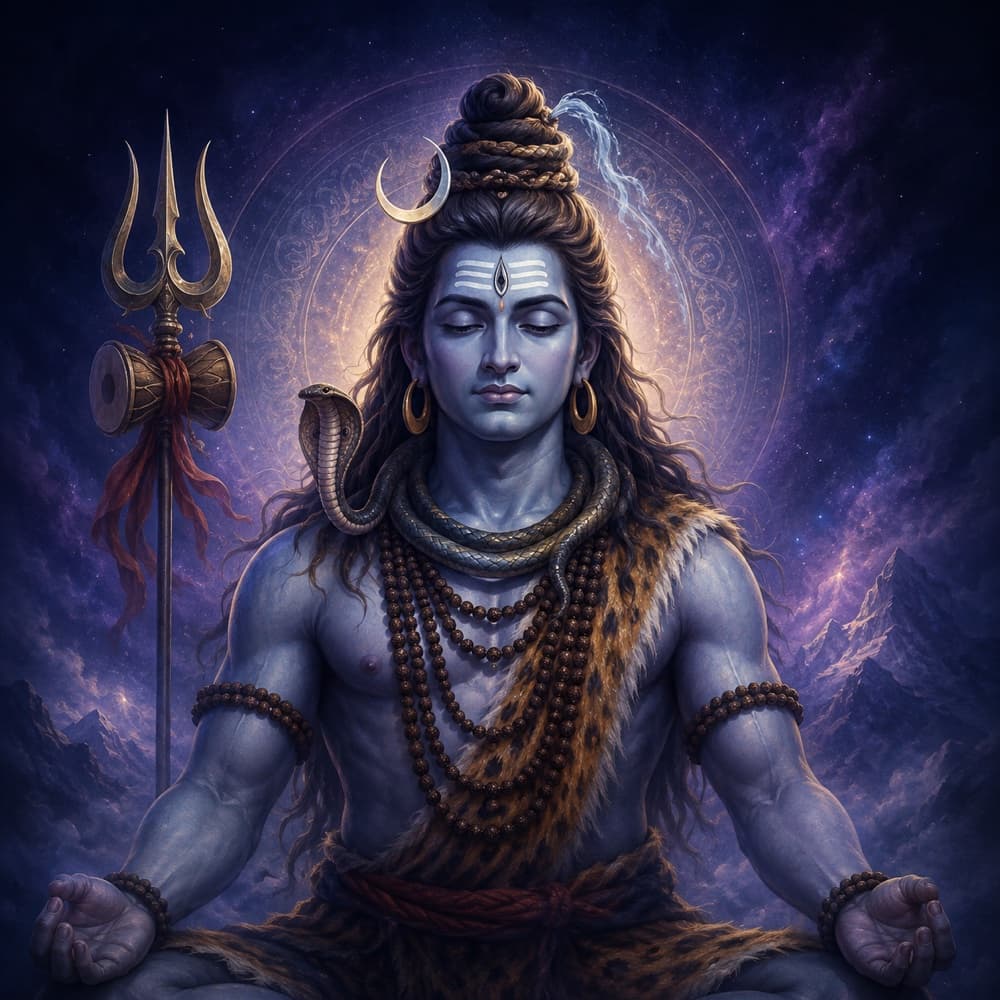 Dedicated toLord Shiva
हर हर हर महादेव!सत्य, सनातन, सुन्दर, शिव सबके स्वामी।अविकारी अविनाशी, अज अन्तर्यामी ॥
आदि, अनन्त, अनामय, अकल, कलाधारी।अमल, अरूप, अगोचर, अविचल, अघहारी ॥
ब्रह्मा, विष्णु, महेश्वर तुम त्रिमूर्तिधारी।कर्ता, भर्ता, धर्ता, तुम ही संहारी ॥
रक्षक, भक्षक, प्रेरक, प्रिय औढरदानी।साक्षी, परम अकर्ता, कर्ता अभिमानी ॥
मणिमय-भवन निवासी, अति भोगी रागी।सदा श्मशान विहारी, योगी वैरागी ॥
छाल-कपाल, गरल-गल, मुण्डमाल व्याली।चिता भस्मतन त्रिनयन, अयन महाकाली ॥
प्रेत-पिशाच-सुसेवित, पीत जटाधारी।विवसन विकट रूपधर, रुद्र प्रलयकारी ॥
शुभ्र-सौम्य, सुरसरिधर, शशिधर, सुखकारी।अतिकमनीय, शान्तिकर, शिव मुनि मन-हारी ॥
निर्गुण, सगुण, निरंजन, जगमय नित्य प्रभो।कालरूप केवल हर! कालातीत विभो ॥
सत्, चित्, आनन्द, रसमय, करुणामय धाता।प्रेम-सुधा-निधि प्रियतम, अखिल विश्व त्राता ॥
हम अतिदीन, दयामय! चरण-शरण दीजै।सब विधि निर्मल मति कर, अपना कर लीजै ॥
Drik Panchang — Har Har Har Mahadev
Traditional public-domain Hindi devotional composition; BhajanDhara transcription and meanings prepared independently
A second independent edition could not be retrieved, so this rests on a single witness. One evident spacing error in the source (अयनमहाकाली) has been separated to अयन महाकाली without changing the wording. No modern source translation is reproduced.
Related prayers
Om Jai Shiv Omkara ↗Om Jai Gangadhar ↗Kailasavasi Shiva Aarti ↗What does Har Har Har Mahadev mean?
The method here is deliberate collision. In one verse Shiva lives in a jewelled house and is deeply given to enjoyment, and in the same breath wanders the cremation ground as a renouncer. He is the supreme non-doer and the one who takes doing upon himself. He wears pyre-ash, a garland of skulls and serpents, is attended by ghosts — and the very next verse calls him white, gentle, exceedingly lovely, a maker of peace. He is the form of time and beyond time. Nothing is reconciled, because the aarti's position is that the reconciling is the mistake. It ends, after all that, with the one unparadoxical thing in it: take us as your own.