Achyutashtakam
अच्युताष्टकम्
A devotional hymn invoking Krishna, Rama, Narayana and Vishnu through many beloved names.
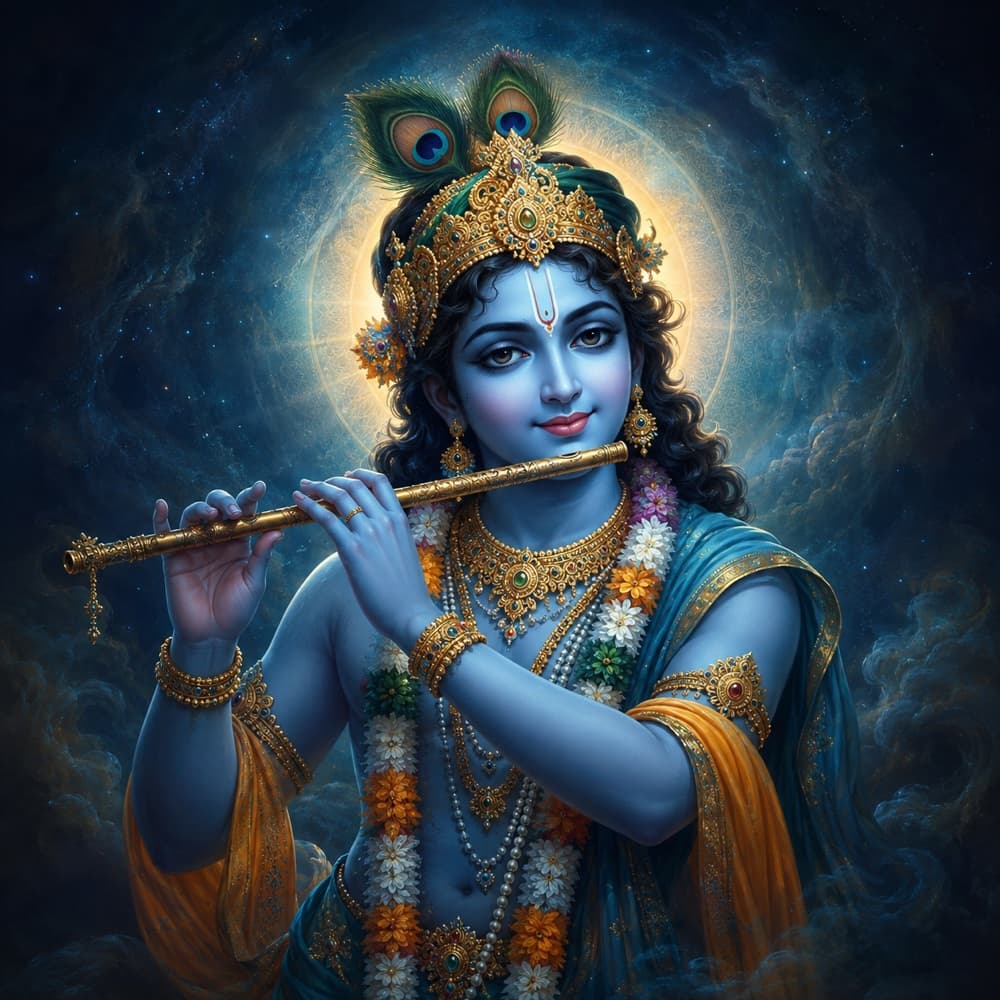 Dedicated toLord Krishna
अच्युतं केशवं रामनारायणं कृष्णदामोदरं वासुदेवं हरिम्।श्रीधरं माधवं गोपिकावल्लभं जानकीनायकं रामचन्द्रं भजे ॥१॥
अच्युतं केशवं सत्यभामाधवं माधवं श्रीधरं राधिकाराधितम्।इन्दिरामन्दिरं चेतसा सुन्दरं देवकीनन्दनं नन्दनं सन्दधे ॥२॥
विष्णवे जिष्णवे शङ्खिने चक्रिणे रुक्मिणीरागिणे जानकीजानये।वल्लवीवल्लभायार्चितायात्मने कंसविध्वंसिने वंशिने ते नमः ॥३॥
कृष्ण गोविन्द हे राम नारायण श्रीपते वासुदेवाजित श्रीनिधे।अच्युतानन्त हे माधवाधोक्षज द्वारकानायक द्रौपदीरक्षक ॥४॥
राक्षसक्षोभितः सीतया शोभितो दण्डकारण्यभूपुण्यताकारणः।लक्ष्मणेनान्वितो वानरैः सेवितोऽगस्त्यसम्पूजितो राघवः पातु माम् ॥५॥
धेनुकारिष्टकोऽनिष्टकृद्द्वेषिणां केशिहा कंसहृद्वंशिकावादकः।पूतनाकोपकः सूरजाखेलनो बालगोपालकः पातु मां सर्वदा ॥६॥
विद्युदुद्योतवत्प्रस्फुरद्वाससं प्रावृडम्भोदवत्प्रोल्लसद्विग्रहम्।वन्यया मालया शोभितोरःस्थलं लोहिताङ्घ्रिद्वयं वारिजाक्षं भजे ॥७॥
कुञ्चितैः कुन्तलैर्भ्राजमानाननं रत्नमौलिं लसत्कुण्डलं गण्डयोः।हारकेयूरकं कङ्कणप्रोज्ज्वलं किङ्किणीमञ्जुलं श्यामलं तं भजे ॥८॥
अच्युतस्याष्टकं यः पठेदिष्टदं प्रेमतः प्रत्यहं पूरुषः सस्पृहम्।वृत्ततः सुन्दरं कर्तृ विश्वम्भरं तस्य वश्यो हरिर्जायते सत्वरम् ॥९॥
Related prayers
Madhurashtakam ↗Bala Mukundashtakam ↗Govindashtakam ↗What does Achyutashtakam mean?
The hymn lovingly invokes Vishnu's incarnations and names, especially Krishna and Rama.