बंदौं रघुपति करुना निधान
Bandaun Raghupati Karuna Nidhan
Nine couplets, each a single compressed metaphor — Rama as sun to delusion's darkness, as the pot-born sage who drank the ocean of pride.
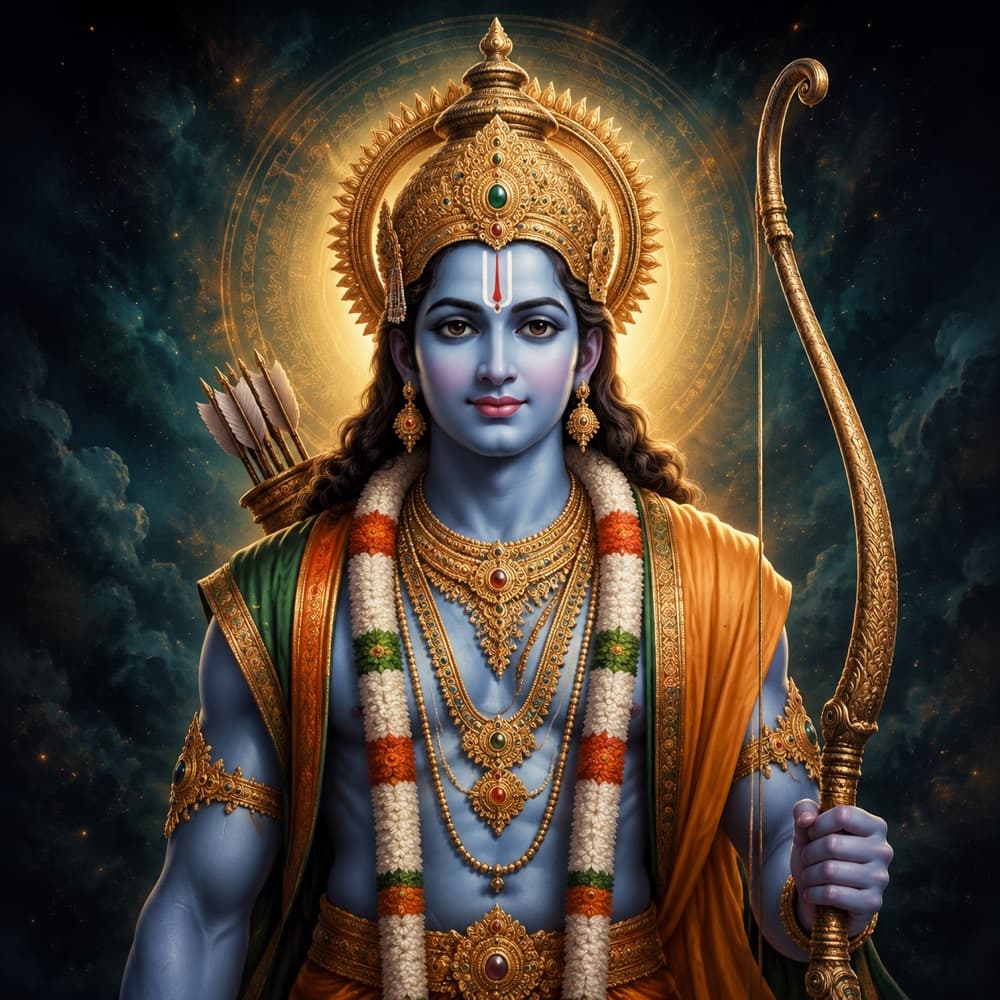 समर्पितभगवान राम
बंदौं रघुपति करुना-निधान।जाते छूटै भव-भेद-ग्यान ॥१॥
रघुबंस-कुमुद-सुखप्रद निसेस।सेवत पद-पंकज अज महेस ॥२॥
निज भक्त-हृदय-पाथोज-भृंग।लावन्य बपुष अगनित अनंग ॥३॥
अति प्रबल मोह-तम-मारतंड।अग्यान-गहन-पावक प्रचंड ॥४॥
अभिमान-सिंधु-कुंभज उदार।सुररंजन, भंजन भूमिभार ॥५॥
रागादि-सर्पगन-पन्नगारि।कंदर्प-नाग-मृगपति, मुरारि ॥६॥
भव-जलधि-पोत चरनारबिंद।जानकी-रवन आनंद-कंद ॥७॥
हनुमंत-प्रेम-बापी-मराल।निष्काम कामधुक गो दयाल ॥८॥
त्रैलोक-तिलक, गुनगहन राम।कह तुलसिदास बिश्राम-धाम ॥९॥
Vinaya Patrika 64, checked against a Vinaya Patrika edition and Drik Panchang
Public-domain composition by Tulsidas; BhajanDhara transcription and meanings prepared independently
Published in aarti compilations as a Rama aarti, this is Vinaya Patrika pada 64, titled श्रीराम वन्दना and set in raga Basant; the verse numbers here are that text's own, and the edition gives nine couplets. No modern source translation is reproduced.
बंदौं रघुपति करुना निधान का अर्थ
Nine couplets, each one a single compressed image with nothing else in it. The method is consistent: name an affliction, then name the natural predator or solvent of it. Delusion is darkness and he is the sun; ignorance is dense forest and he is fire; passions are snakes and he is Garuda; desire is an elephant and he is a lion. The finest of them is the fifth — pride is an ocean and he is Agastya, the sage born in a pot who drank the sea dry. The poem is set in raga Basant, and its last two words give away what all the violence is for: vishram-dham, the house of rest.