आरती श्रीकृष्ण कन्हैया की
Aarti Shri Krishna Kanhaiya Ki
Five dense Braj verses running from the Mathura prison cell to the teaching of the Gita.
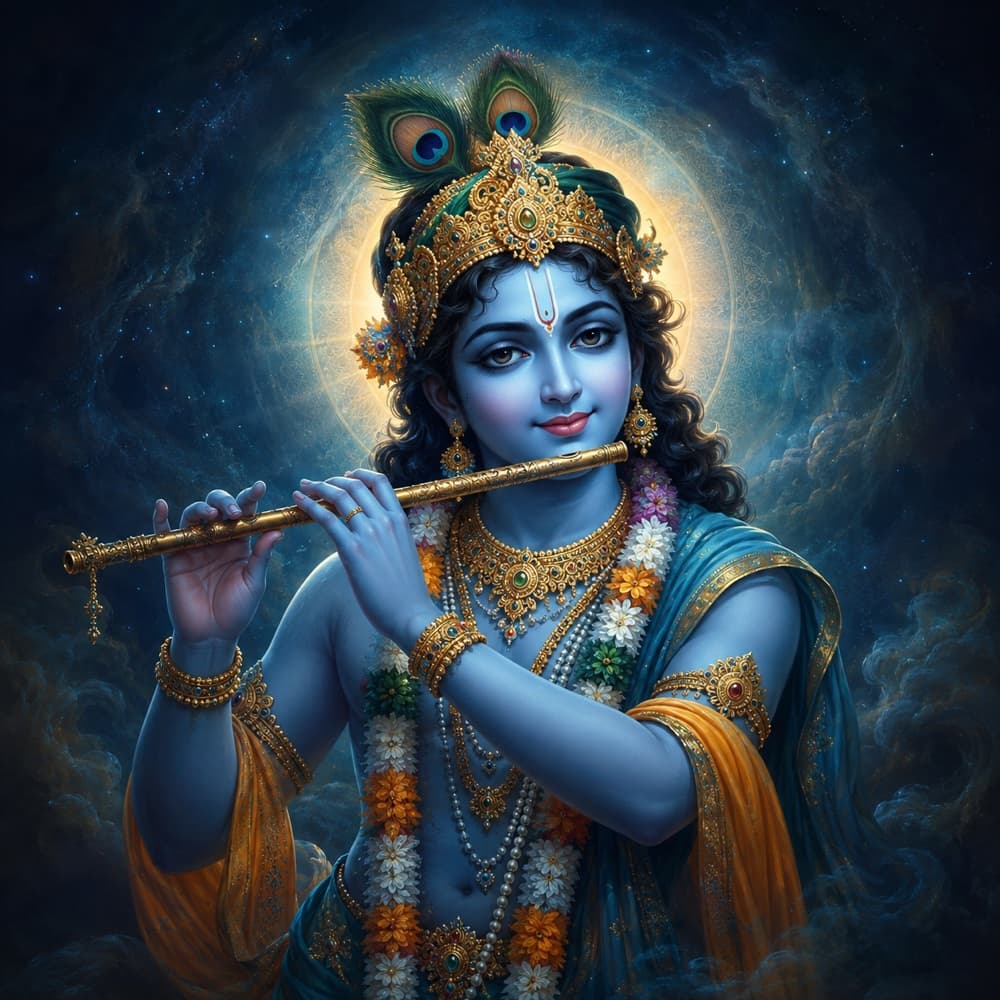 समर्पितभगवान कृष्ण
मथुरा कारागृह अवतारी,गोकुल जसुदा गोद विहारी।नन्दलाल नटवर गिरधारी,वासुदेव हलधर भैया की ॥आरती श्रीकृष्ण कन्हैया की।
मोर मुकुट पीताम्बर छाजै,कटि काछनि, कर मुरलि विराजै।पूर्ण सरक ससि मुख लखि लाजै,काम कोटि छवि जितवैया की ॥आरती श्रीकृष्ण कन्हैया की।
गोपीजन रस रास विलासी,कौरव कालिय, कंस विनासी।हिमकर भानु, कृसानु प्रकासी,सर्वभूत हिय बसवैया की ॥आरती श्रीकृष्ण कन्हैया की।
कहुँ रन चढ़ै भागि कहुँ जावै,कहुँ नृपवर, कहुँ गाय चरावै।कहुँ जोगेस, बेद जस गावै,जग नचाय ब्रज नचवैया की ॥आरती श्रीकृष्ण कन्हैया की।
अगुन सगुन लीला बपु धारी,अनुपम गीता ज्ञान प्रचारी।दामोदर सब विधि बलिहारी,विप्र धेनु सुर रखवैया की ॥आरती श्रीकृष्ण कन्हैया की।
Cross-checked against Drik Panchang and Bhagvad Bhakti editions
Traditional public-domain Braj devotional composition; BhajanDhara transcription and meanings prepared independently
Verse 4 differs between editions: कहुँ नृपवर (set here, and the reading that parses) against Drik Panchang's कहुँ नृप कर, and कहुँ जोगेस (set here) against Drik Panchang's कहुँ जागेस. Both editions read पूर्ण सरक ससि in verse 2, which is retained although सरद, the autumn moon, is the likely original. No modern source translation is reproduced.
आरती श्रीकृष्ण कन्हैया की का अर्थ
Five verses cover the whole life: the prison cell at Mathura, Yashoda's lap, the flute, the rasa dance, Kaliya and Kamsa, the battlefield, the cattle, and finally the Gita. The fourth verse is the one to notice — it sets his contradictions side by side without resolving them. He mounts for battle and he walks away from it; he is a king and he is a cowherd; he is the lord of yoga and he is a boy dancing in Braj. The aarti's claim is that these are not stages he passed through but things simultaneously true.