श्री बाँकेबिहारी तेरी आरती गाऊँ
Shri Banke Bihari Teri Aarti Gaun
The aarti of Banke Bihari, sung at the Vrindavan temple that Swami Haridas's image gave its name to.
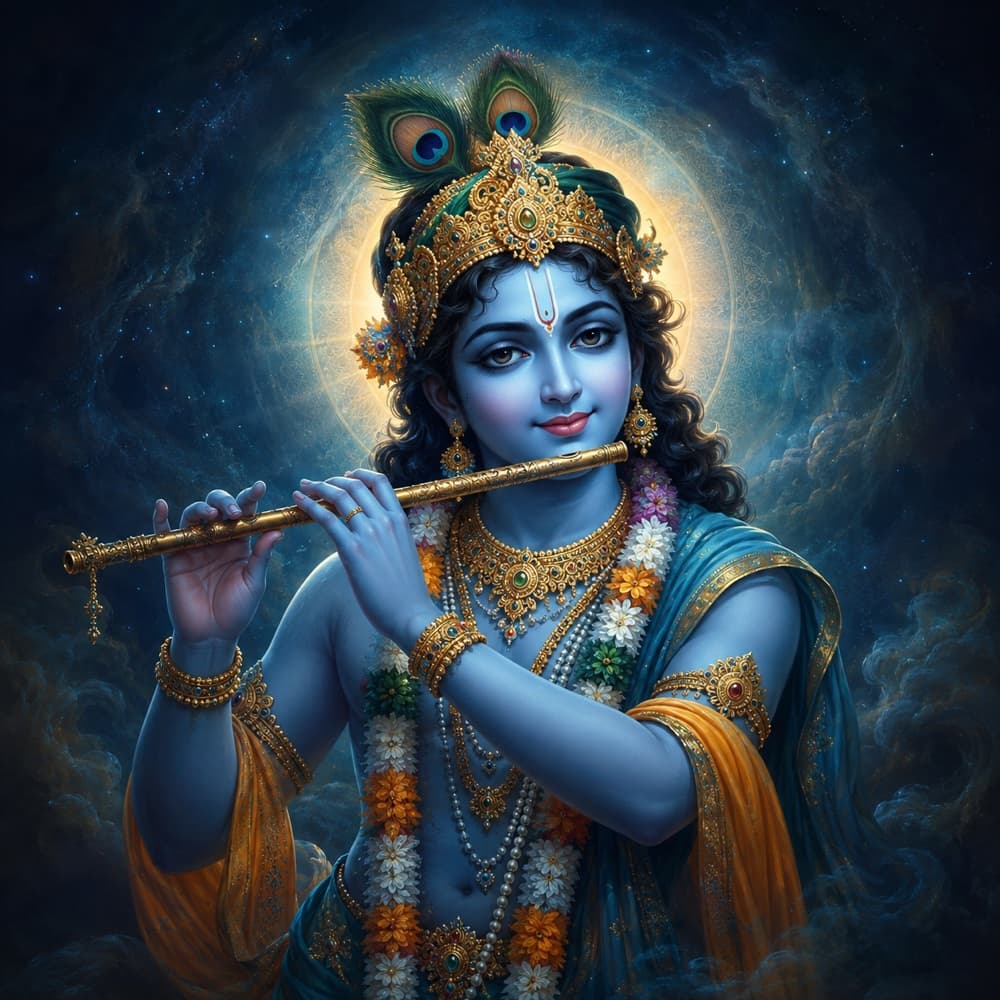 समर्पितभगवान कृष्ण
श्री बाँकेबिहारी तेरी आरती गाऊँ।कुंजबिहारी तेरी आरती गाऊँ।श्री श्यामसुन्दर तेरी आरती गाऊँ।श्री बाँकेबिहारी तेरी आरती गाऊँ ॥
मोर मुकुट प्रभु शीश पे सोहे।प्यारी बंसी मेरो मन मोहे।देखि छवि बलिहारी जाऊँ।श्री बाँकेबिहारी तेरी आरती गाऊँ ॥
चरणों से निकली गंगा प्यारी।जिसने सारी दुनिया तारी।मैं उन चरणों के दर्शन पाऊँ।श्री बाँकेबिहारी तेरी आरती गाऊँ ॥
दास अनाथ के नाथ आप हो।दुःख सुख जीवन प्यारे साथ हो।हरि चरणों में शीश नवाऊँ।श्री बाँकेबिहारी तेरी आरती गाऊँ ॥
श्री हरिदास के प्यारे तुम हो।मेरे मोहन जीवन धन हो।देखि युगल छवि बलि-बलि जाऊँ।श्री बाँकेबिहारी तेरी आरती गाऊँ ॥
आरती गाऊँ प्यारे तुमको रिझाऊँ।हे गिरिधर तेरी आरती गाऊँ।श्री श्यामसुन्दर तेरी आरती गाऊँ।श्री बाँकेबिहारी तेरी आरती गाऊँ ॥
Cross-checked against Drik Panchang and Shri Alija Hanuman editions
Traditional public-domain Hindi devotional composition; BhajanDhara transcription and meanings prepared independently
The four core verses agree across both editions. The opening and closing refrains differ in which epithets appear: Drik Panchang reads कुंजबिहारी and श्यामसुन्दर where the other edition reads हे गिरिधर, श्याम सुन्दर and बाल कृष्ण. Drik Panchang's arrangement is set here. No modern source translation is reproduced.
श्री बाँकेबिहारी तेरी आरती गाऊँ का अर्थ
Banke Bihari is not a generic name for Krishna but one particular image in one particular Vrindavan temple, and the aarti belongs to that place. Its fifth verse names Swami Haridas, the sixteenth-century singer whose devotion the tradition credits with drawing the image out of the ground at Nidhivan, and calls what is seen a yugal chhavi — a paired form, Radha and Krishna in one body. That is the theology of the shrine stated in half a line, and it is why the aarti keeps naming the same figure under three names at once.