Kilaka Stotram
कीलक स्तोत्र · कीलकस्तोत्रम्
The pin that unlocks the Saptashati — fourteen verses on why the Chandi hymn is recited whole, and with knowledge, rather than in pieces.
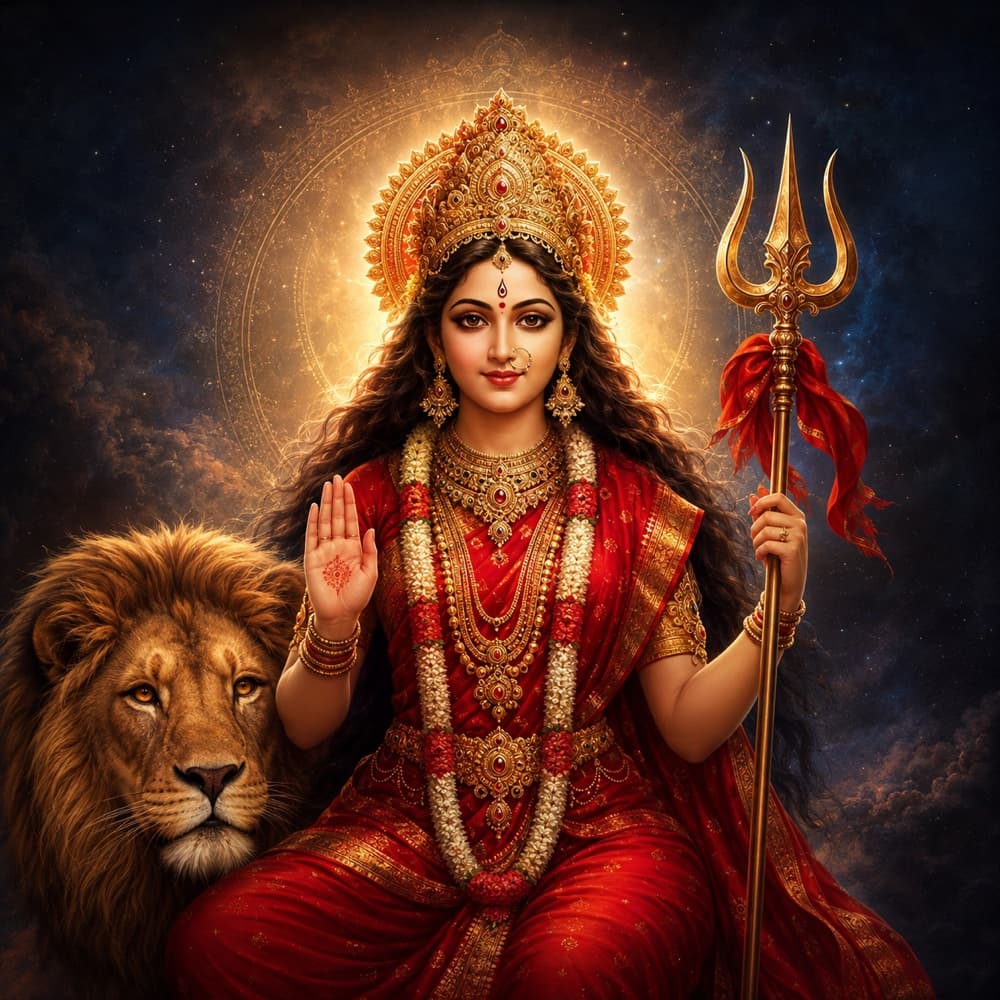 Dedicated toMaa Durga
अथ कीलकम्ॐ अस्य श्रीकीलकमन्त्रस्य शिव ऋषिः, अनुष्टुप् छन्दः, महासरस्वती देवता, श्रीजगदम्बाप्रीत्यर्थं सप्तशतीपाठाङ्गत्वेन विनियोगः।ॐ नमश्चण्डिकायै ॥मार्कण्डेय उवाच
ॐ विशुद्धज्ञानदेहाय त्रिवेदीदिव्यचक्षुषे।श्रेयःप्राप्तिनिमित्ताय नमः सोमार्द्धधारिणे ॥१॥
सर्वमेतद्विजानीयान्मन्त्राणामभिकीलकम्।सोऽपि क्षेममवाप्नोति सततं जाप्यतत्परः ॥२॥
सिद्ध्यन्त्युच्चाटनादीनि वस्तूनि सकलान्यपि।एतेन स्तुवतां देवि स्तोत्रमात्रेण सिद्ध्यति ॥३॥
न मन्त्रो नौषधं तत्र न किञ्चिदपि विद्यते।विना जाप्येन सिद्ध्येत सर्वमुच्चाटनादिकम् ॥४॥
समग्राण्यपि सिद्ध्यन्ति लोकशङ्कामिमां हरः।कृत्वा निमन्त्रयामास सर्वमेवमिदं शुभम् ॥५॥
स्तोत्रं वै चण्डिकायास्तु तच्च गुप्तं चकार सः।समाप्तिर्न च पुण्यस्य तां यथावन्नियन्त्रणाम् ॥६॥
सोऽपि क्षेममवाप्नोति सर्वमेवं न संशयः।कृष्णायां वा चतुर्दश्यामष्टम्यां वा समाहितः ॥७॥
ददाति प्रतिगृह्णाति नान्यथैषा प्रसीदति।इत्थंरूपेण कीलेन महादेवेन कीलितम् ॥८॥
यो निष्कीलां विधायैनां नित्यं जपति संस्फुटम्।स सिद्धः स गणः सोऽपि गन्धर्वो जायते नरः ॥९॥
न चैवाप्यटतस्तस्य भयं क्वापीह जायते।नापमृत्युवशं याति मृतो मोक्षमवाप्नुयात् ॥१०॥
ज्ञात्वा प्रारभ्य कुर्वीत न कुर्वाणो विनश्यति।ततो ज्ञात्वैव सम्पन्नमिदं प्रारभ्यते बुधैः ॥११॥
सौभाग्यादि च यत्किञ्चिद् दृश्यते ललनाजने।तत्सर्वं तत्प्रसादेन तेन जाप्यमिदं शुभम् ॥१२॥
शनैस्तु जप्यमानेऽस्मिन् स्तोत्रे सम्पत्तिरुच्चकैः।भवत्येव समग्रापि ततः प्रारभ्यमेव तत् ॥१३॥
ऐश्वर्यं यत्प्रसादेन सौभाग्यारोग्यसम्पदः।शत्रुहानिः परो मोक्षः स्तूयते सा न किं जनैः ॥१४॥
॥ इति देव्याः कीलकस्तोत्रं सम्पूर्णम् ॥
Related prayers
Sarva Mangala Mangalye ↗Devi Kavach ↗Devi Aparadha Kshamapana Stotra ↗What does Kilaka Stotram mean?
Kilaka means a pin or wedge. The hymn explains, in the voice of the tradition itself, why the Durga Saptashati is treated as a text that must be approached whole and with understanding rather than used piecemeal for particular ends. Its argument is unusual among stotras: it says plainly that the hymn alone is sufficient, that Shiva therefore set a restraint upon it, and that one should begin only after genuinely understanding what one is doing — 'one who acts without understanding comes to grief.' Read together with the Argala Stotram and the Devi Kavach, it forms the third of the three limbs traditionally recited before the Saptashati.